
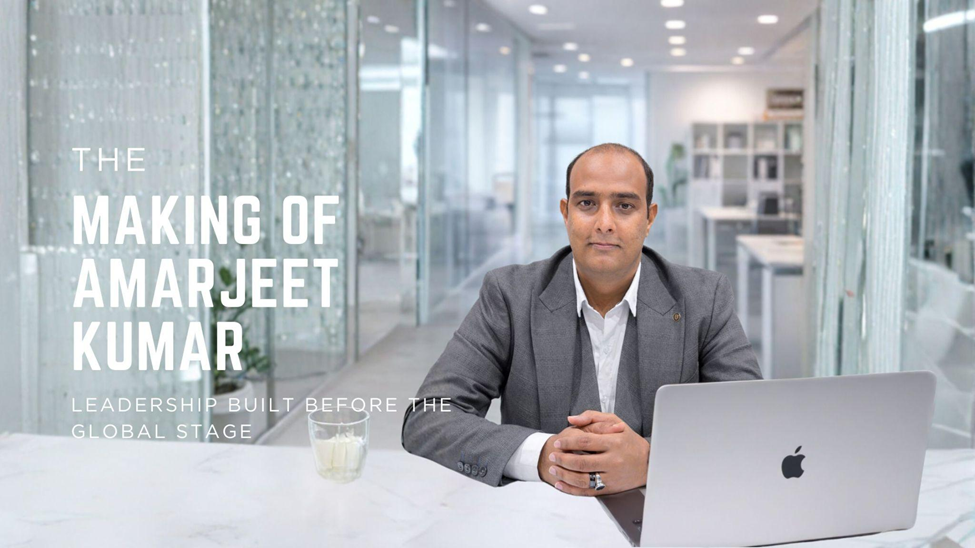
Before his transition to Dubai’s international corporate landscape, Amarjeet Kumar’s professional identity had already been shaped by a disciplined progression marked by adaptability, operational depth, and systems-oriented thinking. His global role did not emerge suddenly; it was the result of years spent building competence in environments that demanded resilience more than recognition. Raised in modest surroundings and exposed early to frequent relocations, Kumar developed an instinct for adjustment. Each transition required integration into new academic and social structures, strengthening his ability to observe systems, understand behavioral dynamics, and establish credibility quickly. This pattern of adaptation would later become central to his leadership style.
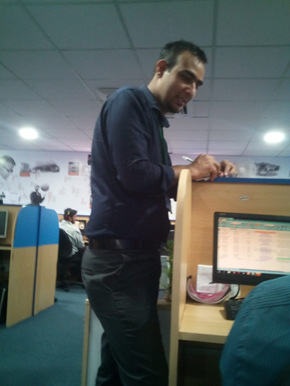
His professional career began at the operational level, where exposure to foundational processes provided him with a granular understanding of organizational mechanics. Rather than seeking accelerated advancement, Kumar focused on mastering execution. In the early phase of his career, he balanced financial responsibility with professional ambition, at times managing multiple roles to stabilize both growth and income. This period forged the discipline and endurance that would define his approach to leadership.
As his responsibilities expanded, Kumar’s perspective evolved from task-based delivery to systems-based optimization. He began analyzing workflow efficiency, team engagement patterns, and structural bottlenecks. His interest in technology and automation further accelerated this shift. By exploring digital tools and performance frameworks, he positioned himself not merely as a contributor but as a problem solver capable of improving operational clarity.
Relocating between cities within India introduced new organizational environments that tested his adaptability. In each setting, Kumar resisted the temptation to replicate previous models without adjustment. Instead, he refined processes to suit cultural and structural differences, reinforcing a critical insight: scalability requires contextual intelligence. Systems must evolve with the teams they serve.
During this formative period, Kumar’s leadership philosophy matured. His influence was built less on visibility and more on consistency. Colleagues recognized his reliability in execution and his preference for structured accountability. Rather than commanding authority, he established it through disciplined delivery and measurable outcomes.
By the time the opportunity arose to relocate to Dubai, Kumar had already transitioned into a strategic professional with strong grounding in automation, engagement design, and scalable systems thinking. The move did not mark the beginning of his leadership journey; it expanded its scale. The foundation had been laid years earlier through incremental growth and operational rigor.
In retrospect, the pre-Dubai chapter of Amarjeet Kumar’s career represents disciplined preparation. It reflects a professional who understood that global exposure amplifies capability but does not replace foundational strength. His later success was not the product of circumstance, but of sustained preparation.
PublishImmediately